
Robotic Platforms
Hardware
Our lab operates a range of robotic platforms that span legged locomotion, humanoid whole-body control, and spacecraft proximity operations — providing the physical testbeds that ground our algorithms in the real world.
Legged Locomotion
Unitree Go2 Quadruped
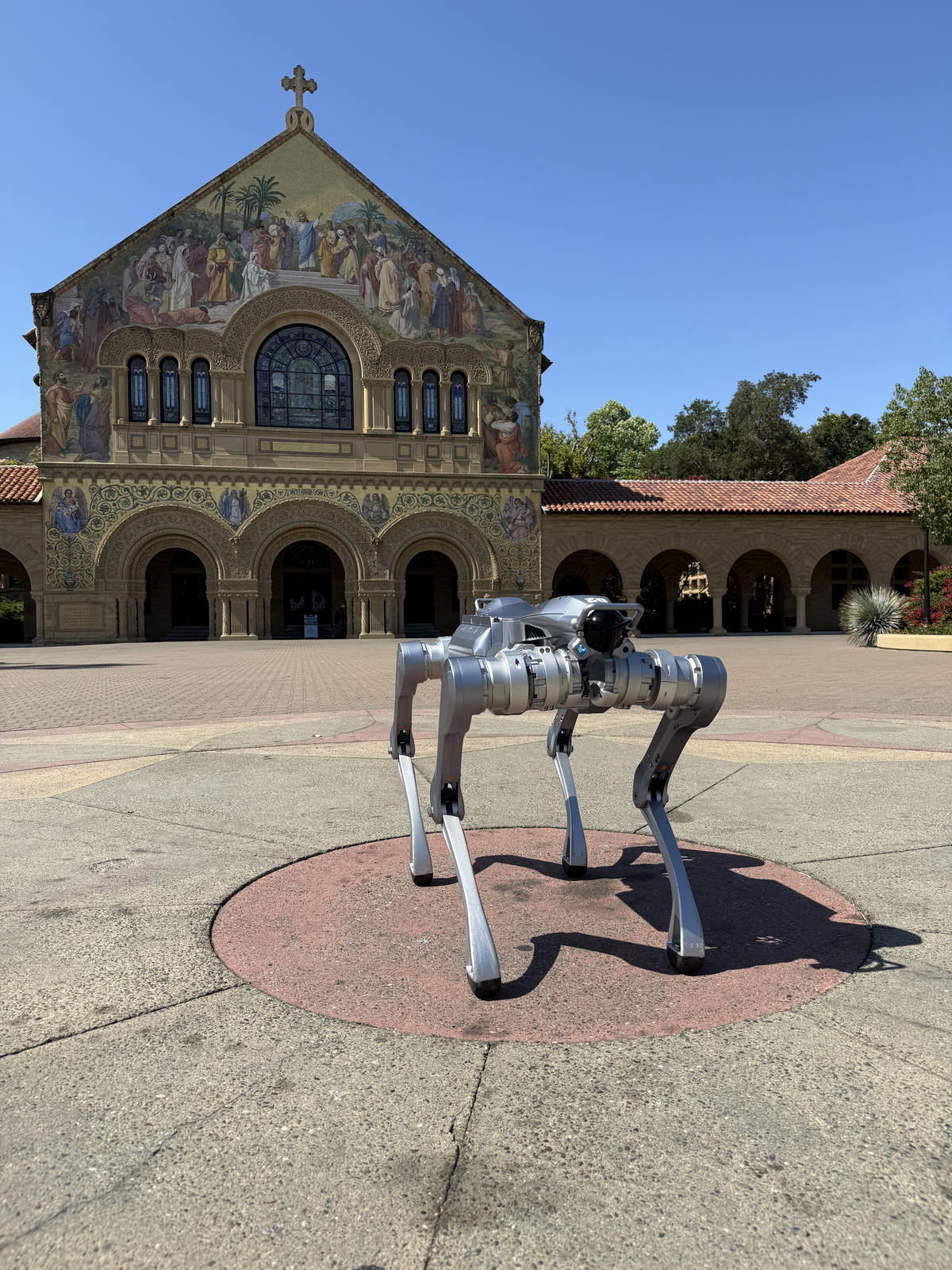
The Unitree Go2 is a high-performance legged quadruped designed for agile locomotion over complex and unstructured terrain. Equipped with onboard compute, force-torque sensing at each leg, and a suite of depth cameras and LiDAR, it provides a capable and accessible platform for deploying learned locomotion and navigation policies in the real world.
We use the Go2 to study how learning-based controllers transfer from simulation to physical hardware — enabling robots to traverse challenging environments, avoid obstacles, and execute long-horizon navigation tasks with minimal human supervision. The platform also serves as a testbed for real-time safety monitoring frameworks that must operate reliably under the physical constraints and sensor noise of outdoor deployment.
Humanoid Whole-Body Control
Unitree G1 Humanoid
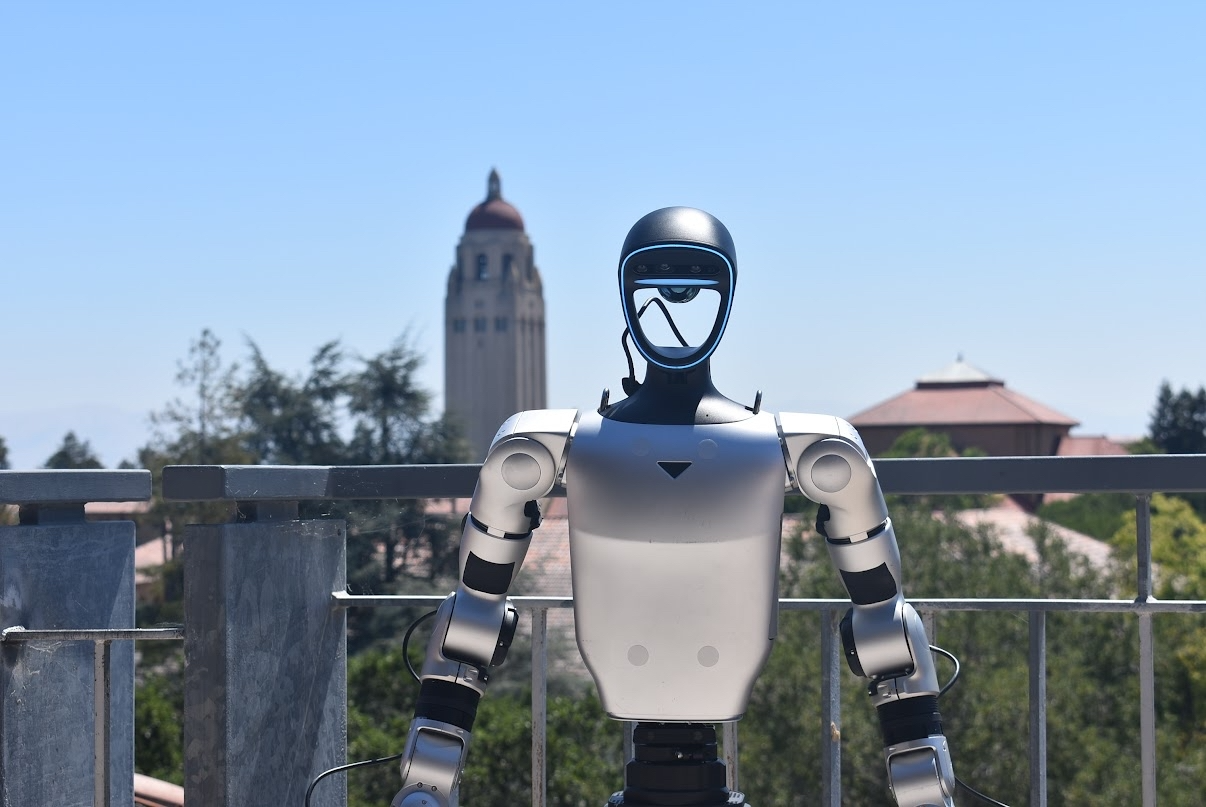
The Unitree G1 is a full-size humanoid robot with 29 degrees of freedom, capable of standing, walking, and performing dextrous whole-body tasks. Its human-like form factor is well-suited for operation in environments designed for people, and its high degree-of-freedom kinematic structure and hybrid dynamics pose rich challenges for whole-body control, motion imitation, and safe policy deployment.
We use the G1 as a platform to develop and evaluate constraint-aware control frameworks that combine reinforcement learning with real-time safety filters. Our work enables policies trained entirely in simulation to satisfy complex physical constraints (including joint limits, collision avoidance, and center-of-mass stability) at runtime without retraining. This makes it possible to retrofit any learned policy with safety, and adapt to constraints on the fly, as task requirements change.
Representative Papers
- •Constrained Whole-Body Tracking for Humanoid Robots · arXiv, 2026
Space Robotics
FreeFlyer
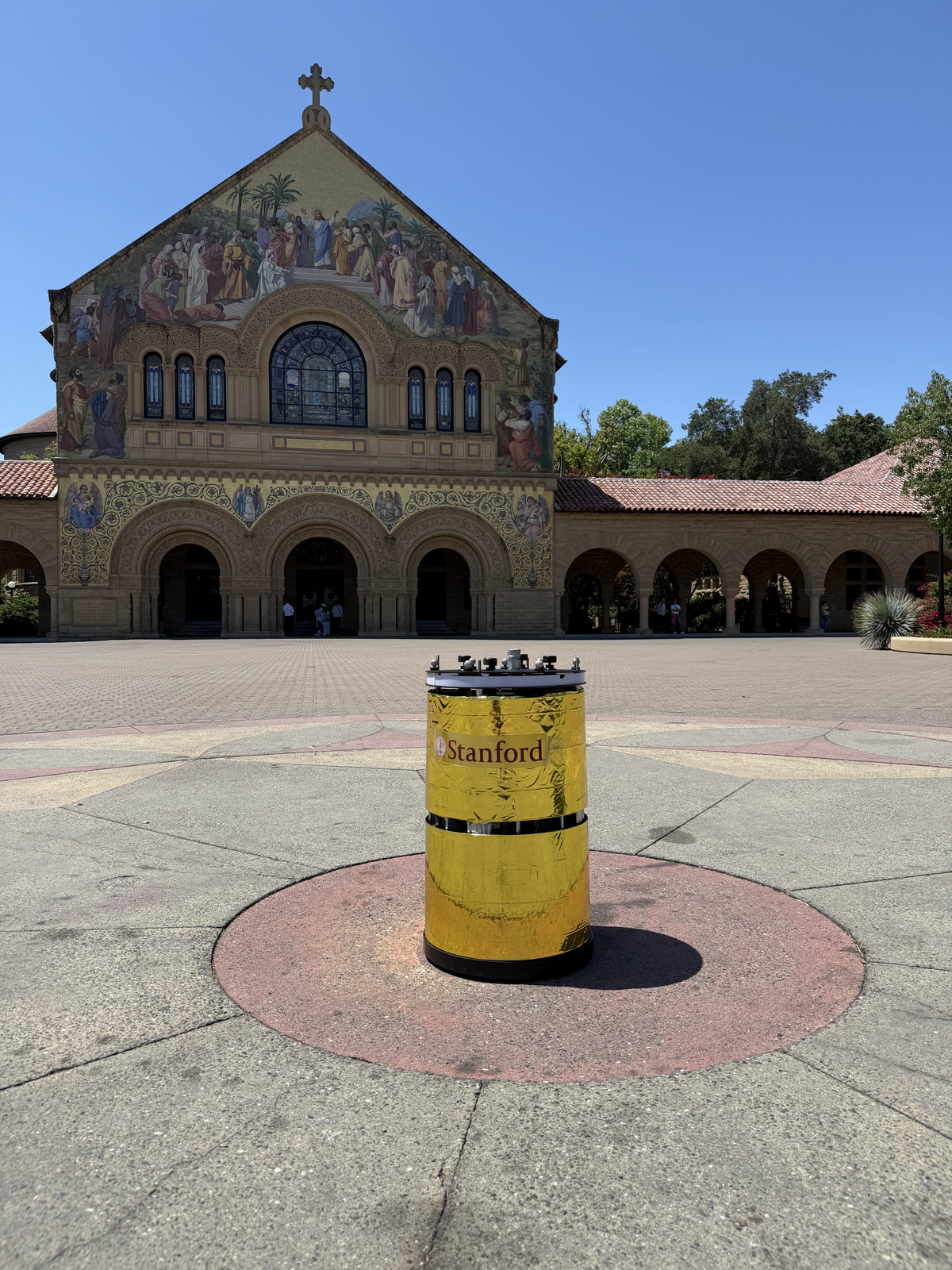
The FreeFlyer is an air-bearing spacecraft testbed that floats frictionlessly on a flat granite surface, enabling hardware-in-the-loop experiments that replicate the dynamics of orbital proximity operations. Equipped with onboard computing, cold-gas thrusters, and a vision system, the platform is ideal for validating algorithms for spacecraft rendezvous, autonomous docking, and guidance, navigation, and control (GNC) without requiring a full space environment.
Our research on the FreeFlyer spans transformer-based trajectory optimization, model predictive control accelerated by learned initializations, and semantic language-guided mission planning — developing the algorithmic foundations for safe, autonomous spacecraft operations in the vicinity of other space objects. The platform bridges the gap between pure simulation and on-orbit validation, letting us stress-test algorithms under realistic actuation and sensing constraints before deployment.